If you’ve ever thought chiropractic is basically just cracking your neck and hoping for the best… you’re not alone.
I used to think it was mostly for pain. Headaches. Tight shoulders. Jaw stuff. (If you know the postpartum jaw clench, you know.)
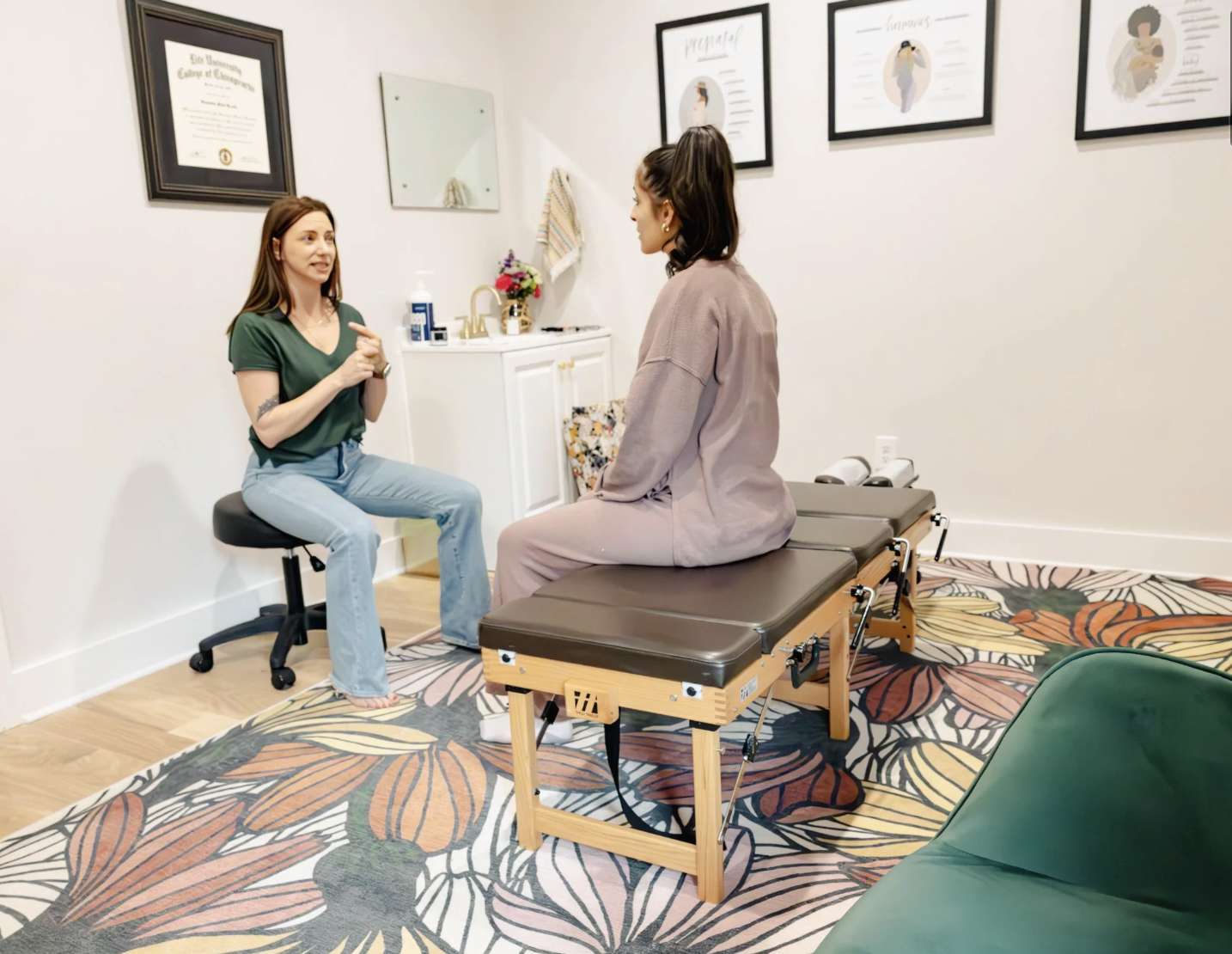
But then I sat down with Dr. Samantha Brooks from The Brainery, and the way she explained it completely shifted how I see it.
Not as a quick fix.
Not as one more thing to add to your list.
But as nervous system work.
The kind where your body finally exhales.
What “Nervous System Regulation” Actually Looks Like in Real Life
One of the first things Dr. Sam said that stuck with me was this.
When moms hear “regulate your nervous system,” it often lands as:
“Here’s another thing you’re not doing right.”
And that’s not the goal.
She explained it in a way that actually felt doable.
Regulation looks like:
- You’re not snapping as fast
- Your shoulders drop without forcing it
- You can take a deeper breath
- You feel less on edge
She said something I loved:
chiropractic shouldn’t be the only place your nervous system gets support. The goal is to help you take that feeling home with you.
That’s what makes it different.
Chiropractic for Pain vs Nervous System-Based Chiropractic
I asked her to break this down, because I think most people don’t realize there’s a difference.
Yes, chiropractic can help with:
- headaches
- jaw tension
- low back pain in pregnancy
- that “everything feels tight” postpartum feeling
But Dr.Sam explained that nervous system-based chiropractic is looking at something deeper.
Not just:
“Where does it hurt?”
But:
“What’s happening in your system overall?”
She talked about how care can shift day to day.
Some days your body needs a direct adjustment.
Other days it needs something gentler. Slower.
Especially for moms who are already touched-out or overstimulated.
And honestly, that distinction alone changes everything.
Why Your Spine Matters for Stress and Regulation
This was one of my favorite parts of the conversation because she made it so simple.
Your brain and spinal cord make up your central nervous system.
And that system is literally housed inside your skull and spine.
So when things aren’t moving well or there’s tension in those areas, it can impact how your brain and body communicate.
She explained that adjustments aren’t just about “cracking.”
They can help:
- improve communication between brain and body
- shift your system out of fight or flight
- reduce that constant “on edge” feeling
And something I didn’t know before this conversation.
She shared that certain areas of the spine can actually stimulate your stress response. So if care isn’t balanced, you can leave feeling more activated instead of more grounded.
Which, if you’ve ever had that experience, makes a lot of sense.
Why Motherhood Hits Your Nervous System So Hard
At one point I said something along the lines of, “I feel exhausted in a way that’s hard to explain,” and she immediately got it.
Because motherhood isn’t just emotionally intense.
It’s physically and neurologically intense.
She walked through all the layers:
- hormones
- sleep deprivation
- physical recovery
- constant awareness of your baby
- identity shifts
- the repetitive strain on your body
So yes, your shoulders are tight.
Yes, your jaw is clenched.
Yes, your breath feels shallow.
And we often label that as anxiety.
But Dr. Sam said something that really landed:
sometimes it’s not anxiety. Sometimes it’s your nervous system trying to survive.
What This Means for Babies and Kids Too
We also talked about kids, and this part was really interesting.
She explained how early reflexes and movement patterns shape brain development.
And when those don’t fully integrate, it can show up later as:
- difficulty focusing
- sensory behaviors
- emotional reactivity
- big responses under stress
She described it as “gaps” in the system.
Not something being wrong.
Just something that might need support.
And again, it’s not a replacement for therapy. It’s another layer to consider.
How to Find a Provider Like This
I asked her what people should look for, especially if they don’t live in the Atlanta area.
She recommended:
- ICPA (International Chiropractic Pediatric Association)
- Focus Academy
And she said something I think is really important.
If you tried chiropractic before and it didn’t work, that doesn’t mean chiropractic doesn’t work. It might just mean that provider or approach wasn’t the right fit.
Which honestly applies to so many things.
Where to Start If You’re Feeling Overwhelmed
We ended the conversation really simply.
Not with a huge to-do list.
But with awareness.
She encouraged starting with:
- noticing your body
- paying attention to your breath
- getting curious instead of critical
And building support from there.
Because the goal isn’t to add more.
It’s to feel more grounded in your day-to-day life.
Support for Moms in Florida and Georgia
If this conversation felt like it connected some dots for you, this is exactly the kind of work we care about at Nurture & Be.
We support women and moms across Florida and Georgia who feel overwhelmed, anxious, or disconnected, and help them understand what’s actually going on underneath that.
Sometimes that includes therapy.
Sometimes medication support.
Sometimes connecting you with trusted providers like Dr. Samantha Brooks at The Brainery.
Because care works best when it’s connected.
You don’t have to have it all figured out before reaching out.
We offer a free 20-minute consultation to help you get a feel for the process, ask questions, and see what support could look like for you.
You can schedule that whenever you’re ready.
To learn more about The Brainery visit https://www.thebraineryatl.com